


Parenting Plan Violations in Washington: How Courts Hold Parents Accountable
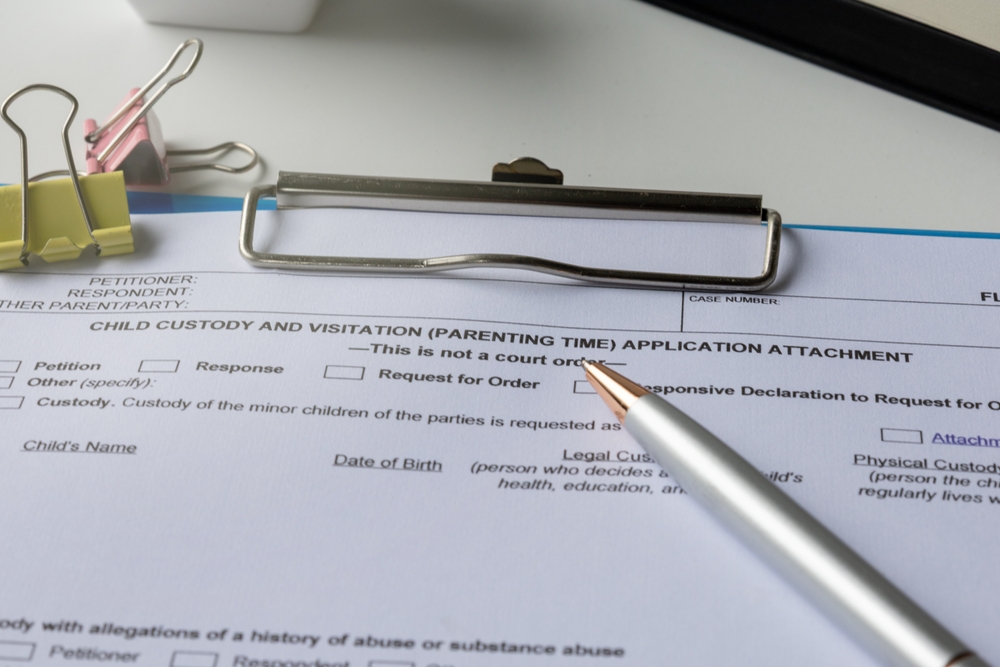
Court-ordered parenting plans establish enforceable residential schedules and decision-making authority
for separated or divorced parents in Washington. When one parent refuses to follow the plan by denying
parenting time, missing exchanges, or violating other court-ordered terms, the affected parent has legal
remedies to enforce compliance and hold the violating parent accountable.
Understanding what constitutes a parenting plan violation, what proof you need, and what enforcement
options Washington law provides helps you protect your relationship with your child and stop ongoing
interference. A
child custody lawyer
can provide answers to your specific questions.
Key Takeaways: Parenting Plan Violations in Washington
- Violations of residential schedules, decision-making authority, or other plan provisions may result
in contempt proceedings and court-imposed penalties. - Courts must find the violating parent knowingly and intentionally disobeyed the parenting plan
without legitimate justification before imposing contempt sanctions. - Washington courts may order additional residential time to compensate the affected parent for missed
visits caused by the other parent’s violations. - Courts may order the violating parent to pay the other parent’s attorney’s fees and impose monetary
sanctions to deter future violations. - Chronic noncompliance can be grounds for modifying the residential schedule or decision-making
authority if violations demonstrate the current plan no longer serves the child’s best interests.
What Counts as a Parenting Plan Violation in Washington?
A parenting plan violation occurs when a parent fails to comply with court-ordered terms governing
residential time, decision-making, communication, or other provisions in the plan. Common violations
include:
Denying Residential Time
Refusing to allow the other parent scheduled parenting time, making the child unavailable during
exchanges, or withholding the child without legal justification violates the residential schedule.
Missing Exchanges or Returning the Child Late
Failing to appear for scheduled exchanges, consistently arriving late, or returning the child hours or
days after the scheduled end of parenting time disrupts the other parent’s residential time and violates
the plan.
Violating Decision-Making Authority
Making major decisions about the child’s education, healthcare, or religious upbringing without
consulting the other parent or without authority to make unilateral decisions violates decision-making
provisions.
Interfering With Communication
Blocking phone calls, refusing to allow video chats, or preventing the child from communicating with the
other parent during scheduled contact times may violate communication provisions in the plan.
Relocating Without Proper Notice or Court Approval
Moving outside the child’s school district or beyond the distance specified in the parenting plan without
following Washington’s relocation procedures violates the plan and may constitute contempt.
Disparaging the Other Parent to the Child
While difficult to prove, repeated and documented disparagement that violates specific plan provisions
prohibiting such conduct may support contempt findings.
How Washington Courts Enforce Parenting Plans
Washington law provides multiple enforcement mechanisms when parents violate court-ordered parenting
plans. The primary tool is a motion for contempt under RCW 26.09.160, which allows courts
to hold
non-compliant parents accountable and impose remedies to prevent future violations.
Filing a Motion for Contempt
The affected parent files a motion asking the court to find the other parent in contempt for violating
the parenting plan. The motion must specify which provisions were violated, the dates and circumstances
of each violation, and the relief requested. This motion may require the alleged violator to appear in
court and explain why they should not be held in contempt.
Courts schedule hearings within weeks of filing, particularly when violations involve denied parenting
time or safety concerns. Both parents submit declarations, evidence, and witness statements supporting
their positions. The court evaluates whether violations occurred, whether they were willful and
intentional, and what remedies are appropriate.
What “Willful Violation” Means
Washington courts require proof that the violating parent knowingly and intentionally disobeyed the
parenting plan without legitimate justification. Accidental violations, misunderstandings about schedule
details, or situations where compliance was impossible due to emergencies generally do not support
contempt findings.
For example, a parent who keeps the child home from an exchange because the child has a high fever and
requires medical care has a legitimate justification. A parent who refuses to return the child because
they “forgot” the schedule or decided the other parent “doesn’t deserve” parenting time acts willfully.
Evidence of willful violation includes text messages or emails showing the parent understood their
obligations but refused to comply, patterns of repeated violations demonstrating intentional disregard
for the plan, and lack of reasonable efforts to remedy violations or communicate about legitimate
obstacles.
Penalties and Remedies for Parenting Plan Violations
Washington courts have broad discretion to impose remedies that enforce compliance and compensate
affected parents. Common remedies include:
-
Make-up parenting time.
Courts may order additional residential time to compensate for missed visits. Make-up time often
occurs on dates and times convenient for the affected parent, sometimes requiring the violating
parent to adjust their schedule to accommodate the makeup time. -
Attorney’s fees.
Courts might order violating parents to pay the other parent’s attorney’s fees incurred in bringing
the contempt motion. Fee awards punish noncompliance and deter future violations by imposing
financial consequences. -
Civil penalties and sanctions.
Courts may impose monetary fines or other civil penalties for contempt violations. Penalties
increase for repeated violations or egregious conduct demonstrating intentional interference with
the parent-child relationship. -
Modification of the parenting plan.
If violations demonstrate the current plan is unworkable or the violating parent cannot comply with
court orders, the court may modify the residential schedule, decision-making authority, or other
provisions. Chronic violations by one parent may justify shifting more residential time to the
compliant parent or restricting the violating parent’s time. -
Jail time in extreme cases.
While rare in parenting plan cases, courts may impose brief jail sentences for severe or repeated
contempt violations. Jail sanctions are typically reserved for egregious cases where parents
persistently refuse to comply despite multiple court orders and warnings.
Your Seattle child custody enforcement attorney
can explain what remedies may be available in your case
and advocate on your behalf and for your child’s best interests.
What Proof Do You Need to Show a Parenting Plan Violation?
Effective enforcement requires clear documentation of violations. Courts evaluate credible evidence
showing specific violations occurred, when they happened, and the impact on the child and affected
parent.
Strong evidence includes:
-
Text messages and emails.
Communications showing the other parent refused to comply, made excuses for violations, or
acknowledged missing scheduled time provide direct proof of violations. -
Exchange logs and calendars.
Written records documenting each scheduled exchange, whether it occurred as planned, and any
deviations from the residential schedule create a pattern of compliance or noncompliance. -
Witness statements.
Declarations from people who observed violations—such as family members present during missed
exchanges, daycare providers who saw the child during times the other parent should have had
custody, or third parties who witnessed the violating parent’s conduct—support your claims. -
School and daycare records.
Attendance records, pickup and drop-off logs, and communication with schools or childcare
providers may corroborate your account of violations and demonstrate that the child was with one
parent during times scheduled for the other. -
Police reports.
If you called law enforcement during denied exchanges or documented interference, police reports
provide official records of violations and may include statements from both parents about the
circumstances.
Courts give more weight to contemporaneous documentation created at the time violations occurred
than to after-the-fact recollections. Start documenting violations immediately, even if you hope an
informal resolution will work. Documentation preserves evidence if court intervention becomes
necessary.
Can Repeated Violations Lead to Changes in the Parenting Plan?
Yes. Chronic parenting plan violations may support petitions to modify the residential schedule or
decision-making authority. While contempt proceedings address past violations and impose remedies,
modification proceedings restructure the parenting plan to prevent future problems.
Under RCW 26.09.260, courts may
modify parenting plans when circumstances have changed and modification
serves the child’s best interests. Repeated violations constitute changed circumstances
demonstrating
the current plan is unworkable or one parent cannot comply with court orders.
Specifically, if a court has found a parent in contempt at least twice within three years for failing
to
comply with the residential schedule, and modification is in the child’s best interests, the court
may
grant a major modification shifting significant residential time to the compliant parent.
Custody modification based on
violations requires showing that the violations harm the child’s welfare,
create instability, or interfere with the child’s relationship with the compliant parent. Courts
balance
the child’s need for stable relationships with both parents against the need to protect the child
from
ongoing parental conflict and unpredictability caused by violations.
Can You Withhold Child Support If the Other Parent Violates the Parenting Plan?

No. Washington law treats child support obligations and parenting time as separate legal duties.
RCW 26.09.160
explicitly prohibits parents from withholding child support payments based on parenting time
violations. Child support belongs to the child, not the other parent, and withholding support harms
the child regardless of the other parent’s conduct.
If the other parent denies parenting time or violates the residential schedule, the proper remedy is
filing a contempt motion to enforce the parenting plan. Withholding support does not resolve the
parenting time violation and exposes you to your own contempt action for failing to pay
court-ordered
support.
Courts take support withholding seriously and may impose wage garnishment, attorney’s fees, and other
penalties for non-payment. Parents who withhold support lose credibility in court and undermine
their
enforcement efforts by creating their own violations.
What If the Other Parent Keeps Violating the Plan Repeatedly?
Chronic violations require escalating responses. After one or two isolated violations, informal
communication or a strongly worded letter from an attorney may resolve the problem. When violations
continue despite warnings, court intervention becomes necessary.
If the other parent keeps violating the plan, speak to an attorney for help and take the
following
actions:
- File contempt motions for each pattern of violations. Courts impose increasing
penalties for repeat offenders, including higher attorney’s fees, larger civil penalties, and
more
serious consequences like modified parenting plans or restricted decision-making authority. - Document every violation consistently. Patterns of noncompliance carry more
weight
than isolated incidents. Show the court that violations are intentional, ongoing, and harmful to
the
child’s stability and your relationship with the child. - Consider petitioning for parenting plan modification if contempt remedies do not stop
violations. A modified plan that reduces the violating parent’s residential time or
decision-making authority may better protect the child and create a schedule the violating
parent
can actually follow.
In cases involving safety concerns, seek restrictions on residential time under RCW 26.09.191 rather than
relying solely on contempt proceedings. Restrictions may include supervised visitation, mandatory
testing, or suspension of residential time until safety concerns are addressed.
FAQ: Parenting Plan Violations in Washington
How Long Do I Have to File a Contempt Motion After a Parenting Plan Violation?
Washington law does not impose a strict statute of limitations for filing contempt motions for
parenting plan violations, but courts expect timely enforcement actions. Waiting months or years
to
file after violations may weaken your case, as judges question why violations weren’t serious
enough
to address promptly. Document violations as they occur and file contempt motions within a
reasonable
timeframe to demonstrate the violations are ongoing concerns rather than stale complaints.
What If the Other Parent Claims They Had a Good Reason for Violating the Plan?
Courts evaluate whether the parent had a legitimate justification for noncompliance. Valid
reasons
include medical emergencies, unavoidable work conflicts, or circumstances beyond the parent’s
control that made compliance impossible. The violating parent bears the burden of proving their
justification was reasonable and that they made efforts to remedy the violation or communicate
about
the obstacle.
Can I Record the Other Parent to Prove Parenting Plan Violations?
Washington is a two-party consent state under RCW 9.73.030, meaning you generally cannot record
private conversations without the other person’s consent. However, you may record exchanges that
occur in public places where there is no reasonable expectation of privacy, such as parking lot
handoffs. Consult an attorney before using recordings to ensure your evidence collection methods
comply with Washington law.
What If My Child Doesn’t Want to Go With the Other Parent During Their Scheduled Time?
The parenting plan governs residential time, not the child’s preferences, unless the child is of
sufficient age and maturity to express a reasoned preference. If your child consistently refuses
to
go, document the circumstances, encourage compliance with the plan, speak with a lawyer, and
avoid
forcing the child if safety concerns exist. The other parent may file contempt against you if
you do
not facilitate exchanges, even if the child resists. If the child’s refusal stems from
legitimate
safety concerns, seek emergency restrictions rather than unilaterally withholding the child.
Does the Police Department Enforce Parenting Plans in Washington?
No. Police cannot enforce civil court orders, such as parenting plans, during custody exchanges.
Officers may respond to keep the peace or document the situation if you call during a denied
exchange, but they will not force a parent to hand over a child or arrest someone for contempt.
Law
enforcement may intervene if criminal conduct occurs, but routine parenting plan violations
require
court enforcement through contempt motions, not police action.
Enforce Your Parenting Rights With Legal Action
Parenting plan violations disrupt your child’s stability and damage your relationship with your
child.
When informal communication fails to stop violations, court enforcement becomes necessary to hold
the
other parent accountable and protect your parenting time.
Whether you’re facing denied residential time, chronic schedule violations, or decision-making
interference, talk with a family law attorney who understands Washington parenting plan enforcement
procedures and can help you pursue effective remedies.
Contact Dickson Frohlich Phillips Burgess
for a consultation. Bring your parenting plan,
documentation of violations, and questions about your enforcement options. From there, we’ll outline
the
steps to protect your parenting rights and hold the other parent accountable with clarity and
strategic
focus.
